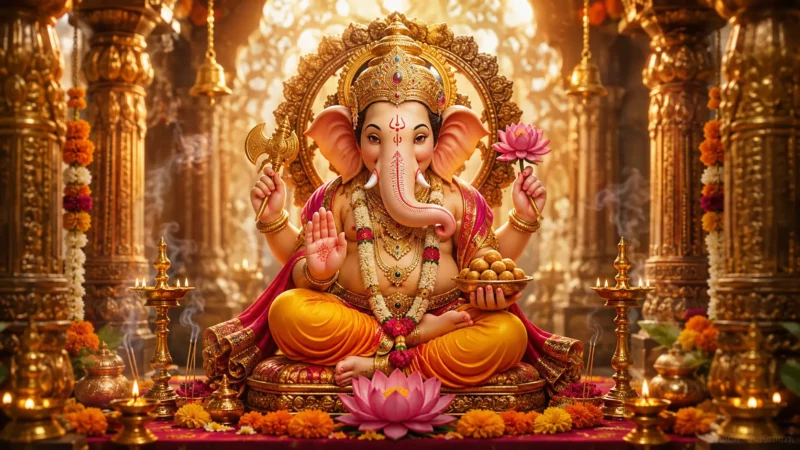
The Ganesh Stotram, commonly known as Sankata Nashana Ganapati Stotram, begins with “Pranamya Shirasa Devam.” It is traditionally linked with the Narada Purana and is said to have been spoken by Sage Narada. The prayer contains the twelve names of Lord Ganesha.
Also Read: Why Vaibhav Laxmi Puja is Essential For You
Ganesh Stotram Lyrics in Sanskrit
Suggested Puja

Triyuginarayan Gauri Shankar Vivah Puja for Love & Relationships
Puja For Love, Marriage, Mutual Understanding & Strong Relationship
ॐ श्री गणेशाय नमः।
नारद उवाच।
प्रणम्य शिरसा देवं गौरीपुत्रं विनायकम्।
भक्तावासं स्मरेन्नित्यमायुःकामार्थसिद्धये॥१॥
प्रथमं वक्रतुण्डं च एकदन्तं द्वितीयकम्।
तृतीयं कृष्णपिङ्गाक्षं गजवक्त्रं चतुर्थकम्॥२॥
लम्बोदरं पञ्चमं च षष्ठं विकटमेव च।
सप्तमं विघ्नराजेन्द्रं धूम्रवर्णं तथाष्टमम्॥३॥
नवमं भालचन्द्रं च दशमं तु विनायकम्।
एकादशं गणपतिं द्वादशं तु गजाननम्॥४॥
द्वादशैतानि नामानि त्रिसन्ध्यं यः पठेन्नरः।
न च विघ्नभयं तस्य सर्वसिद्धिकरः प्रभुः॥५॥
विद्यार्थी लभते विद्यां धनार्थी लभते धनम्।
पुत्रार्थी लभते पुत्रान्मोक्षार्थी लभते गतिम्॥६॥
जपेद्गणपतिस्तोत्रं षड्भिर्मासैः फलं लभेत्।
संवत्सरेण सिद्धिं च लभते नात्र संशयः॥७॥
अष्टेभ्यो ब्राह्मणेभ्यश्च लिखित्वा यः समर्पयेत्।
तस्य विद्या भवेत्सर्वा गणेशस्य प्रसादतः॥८॥
इति श्री नारदपुराणे संकटनाशनं नाम
श्री गणपति स्तोत्रं सम्पूर्णम्॥
Ganesh Stotra Lyrics in English
Om Shri Ganeshaya Namah
Narada Uvacha
Pranamya shirasa devam Gauri putram Vinayakam
Bhaktavasam smarennityam ayuh kamartha siddhaye
Prathamam Vakratundam cha Ekadantam dvitiyakam
Tritiyam Krishnapingaksham Gajavaktram chaturthakam
Lambodaram panchamam cha Shashtham Vikatameva cha
Saptamam Vighnarajendram Dhumravarnam tathashtamam
Navamam Bhalachandram cha Dashamam tu Vinayakam
Ekadasham Ganapatim Dvadasham tu Gajananam
Dvadashaitani namani Trisandhyam yah pathen narah
Na cha vighna bhayam tasya Sarvasiddhikaram Prabho
Vidyarthi labhate vidyam Dhanarthi labhate dhanam
Putrarthi labhate putran Moksharthi labhate gatim
Japet Ganapati Stotram Shadbhir masaih phalam labhet
Samvatsarena siddhim cha Labhate natra sanshayah
Ashtabhyo brahmanebhyashcha Likhitva yah samarpayet
Tasya vidya bhavet sarva Ganeshasya prasadatah
What is Ganesh Stotram?
Shree Ganesh Stotram is a prayer dedicated to Lord Ganesha. The word stotram simply refers to a prayer that praises a deity. This particular Ganpati Stotra praises Lord Ganesha through twelve of his well-known names.
These include Vakratunda, Ekadanta, Gajavaktra, Lambodara, Vighnarajendra, Bhalachandra, Ganapati, and Gajanana. Lord Ganesha is traditionally known as the remover of obstacles. This is why many devotees remember him before beginning something important.
What are the Benefits of Ganesh Stotram?
Devotees have traditionally recited Ganesh Stotram while praying for wisdom, success, and freedom from difficulties. The stotram itself mentions knowledge, wealth, children, and spiritual progress among the results associated with its recitation.
Here are some commonly associated benefits of reciting Ganesh Stotra lyrics:
1. Helps Seek Lord Ganesha’s Blessings
Lord Ganesha is traditionally worshipped before important tasks. Reciting his stotram can be a simple way to begin an activity with prayer and devotion.
2. Traditionally Associated With Removing Obstacles
Ganesha is widely known as Vighnaharta, or the remover of obstacles. The Ganesh Stotram also speaks about freedom from the fear of obstacles.
For devotees, reciting the prayer can bring a sense of faith when they are going through a difficult period.
3. Supports Focus and Calm
Regular prayer gives you a few quiet minutes away from daily distractions. Reciting the same verses with attention can also help you settle your mind before beginning your day.
4. Traditionally Linked With Knowledge
The stotram specifically mentions students receiving knowledge. Because Lord Ganesha is associated with wisdom and learning, many students choose to pray to him before studying or taking an important exam.
5. Helps Start New Work With a Positive Mindset
Many people pray to Lord Ganesha before starting a new job, business, journey, or important project. Ganesh Stotram can become part of that prayer routine.
How to Chant Ganesh Stotram The Ideal Way?
Reciting the Ganpati Stotra does not require any elaborate setup, but a few simple steps can help you approach it with the right focus and devotion. Here is how most devotees traditionally go about it.
1. Choose the Right Time
Verse five of the stotram mentions reciting the twelve names at Trisandhyam, meaning during the three sacred parts of the day: early morning, noon, and dusk.
Not everyone can manage all three sittings in daily life, so reciting it once a day, ideally soon after waking up and bathing, is considered just as meaningful by most devotees.
2. Cleanse Yourself and Your Space
Take a bath or wash up before sitting for prayer, and choose a clean, quiet corner of your home. If you have a small mandir or a picture or idol of Lord Ganesha, sit facing it.
3. Sit Facing East or North
Traditionally, facing east or north while praying is considered auspicious, since these directions are associated with positive energy and new beginnings.
4. Light a Diya or Incense
Lighting a small lamp or incense stick before you begin is a common practice that helps mark the start of prayer time and creates a peaceful atmosphere.
5. Recite With Correct Pronunciation and Attention
Whether you read from the Sanskrit script or the English transliteration, try to pronounce each name clearly rather than rushing through the verses. Beginners often start with the English version to get comfortable with the words before moving to the original Sanskrit.
6. End With Gratitude
Close your prayer by offering thanks, whether silently or through a small offering like a flower or sweet, before going about your day. This simple habit is believed to carry the calm and focus of your prayer time into the rest of your day.
Summary
The Shree Ganesh Stotram is a short prayer from the Narada Purana that honours Lord Ganesha through twelve of his names. Devotees recite this Ganesh Stotra for wisdom, success, and freedom from obstacles, often before starting new work, exams, or important life events.