Famed as the home of Ambabai, the Karveer Nivasini, Mahalakshmi Temple Kolhapur is a Shakti Peeth where the Goddess faces west and the setting sun’s rays reach her each year.
Also Read: The Powers Of Maa Baglamukhi Devi
Who is Goddess Mahalakshmi?
Suggested Puja
Kanakdhara Stotra Path, Shree Sukta Havan aur Lakshmi Shodopachar Puja
Puja For Abundance, Stability, and Well-being
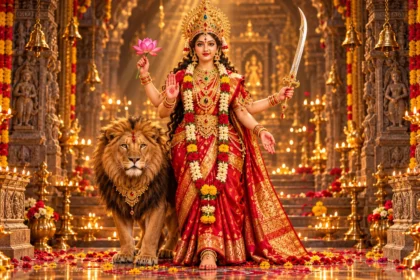
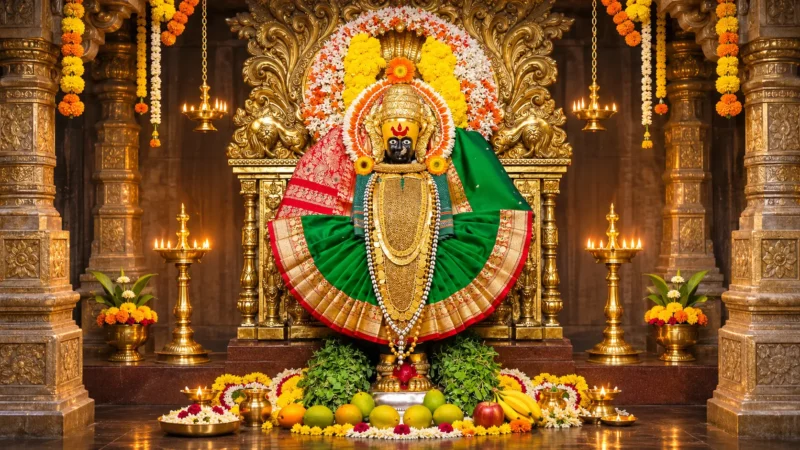
In Kolhapur, Goddess Mahalakshmi is lovingly known as Ambabai, a name that means “Mother.” She is also called Karveer Nivasini, meaning the Goddess who resides in Karveer, the ancient name of Kolhapur.
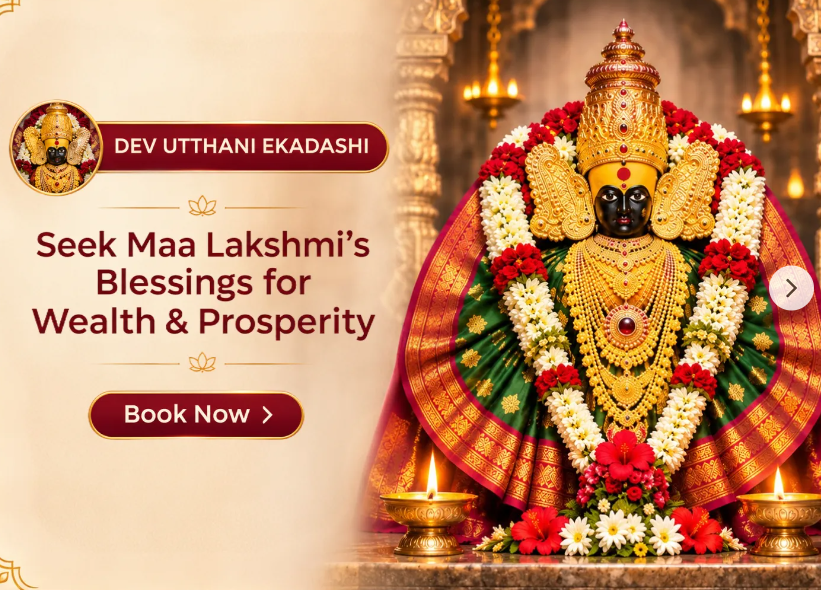
The main deity is a distinctive four-armed black-stone idol placed inside the sanctum. The Goddess is depicted holding symbolic objects associated with her divine form, while a stone lion, regarded as her vahana, stands behind her.
Kolhapur Mahalakshmi Temple: A Revered Shakti Peeth
The Ambabai Temple is not only a shrine of Mahalakshmi. It is also one of the Shakti Peethas, the sacred seats of the Divine Mother, and this status is central to why devotees hold it in such reverence.
Where Sati’s Eyes Fell
According to tradition, Kolhapur is the place where the eyes of Goddess Sati fell. For devotees, this is why they feel Ambabai here watching over them with a mother’s gaze, seeing their struggles and answering their prayers. People also know the shrine as Karvir Peeth or Shree Peetham.
One of Maharashtra’s Great Shakti Peethas
In Maharashtra, people count Kolhapur alongside Tuljapur, Mahur and Saptashrungi among the most important seats of the Goddess. Tradition holds that it is a place where a sincere seeker may find fulfilment of desires or liberation from them.
The Legends of the Mahalakshmi Temple Kolhapur
Kolhapur Mahalaxmi history is inseparable from the legends of the land of Karveer. Several stories are associated with the Goddess, and among them, the story of Kolhasur is one of the most widely known.
The Legend of Kolhasur and Ambabai
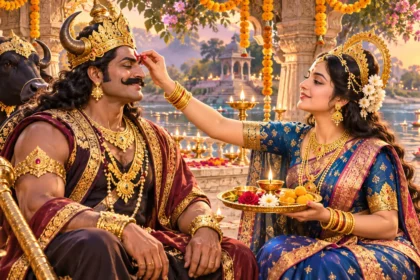
According to local tradition, Kolhasur was a powerful asura who ruled the region. His growing power created suffering, and Goddess Mahalakshmi came to defeat him.
The Goddess ultimately defeated Kolhasur. Before his death, however, tradition holds that he made a request that the region continue to carry his name. This legend is associated with the traditional explanation of the name Kolhapur.
After defeating the asura, Goddess Mahalakshmi, according to tradition, remained in Karveer as its divine protector. This is why she came to be revered as Karveer Nivasini Ambabai.
The Divine Presence of Mahalakshmi in Karveer
Another important tradition holds that Goddess Mahalakshmi and Lord Vishnu have an eternal presence in Karveer. Devotees therefore closely connect the sacred character of the region with the divine couple.
These traditions explain why Kolhapur has remained an important pilgrimage destination for devotees of both Vishnu and Shakti.
Spiritual Significance of Kolhapur Mahalakshmi Temple
Beyond its legends, the temple holds a place of deep importance in the spiritual life of the region. Two themes stand out: its identity as the Kashi of the South and its association with three great forms of the Divine Mother.
Dakshin Kashi: The Kashi of the South
Kolhapur is often called Dakshin Kashi, the Kashi of the South. The title reflects the city’s long-standing status as a centre of devotion and learning, and the temple complex itself contains sacred tanks named Kashi and Manikarnika, names that recall Varanasi.
Three Powers of Shakti Under One Roof
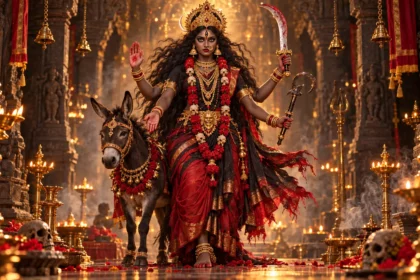
Devotees also associate Kolhapur’s spiritual traditions with three important forms of the Divine Mother. Within the temple, Mahalakshmi occupies the central shrine, with Mahakali and Mahasaraswati in the shrines beside her.
- Mahalakshmi represents abundance, prosperity and sustaining energy
- Mahakali represents strength and transformative power
- Mahasaraswati represents wisdom
Together, these forms represent different expressions of Shakti, which is why devotees see the temple as a place where wealth, strength and wisdom are all present.
Secrets of Mahalaxmi Temple Kolhapur
The word “secrets” here refers to the temple’s lesser-known features and fascinating traditions rather than supernatural claims.
The Mystery of the West-Facing Goddess
The west-facing idol is perhaps the most distinctive feature of the temple. The Goddess faces the direction of the setting sun, unlike the more common east- or north-facing orientation found in many Hindu temples. This orientation becomes especially significant during Kirnotsav.
Kirnotsav: The Sun’s Rays Reach the Goddess
During Kirnotsav, the rays of the setting sun pass through the temple’s western opening and reach the idol of Goddess Mahalakshmi.
According to temple traditions, the rays gradually illuminate different parts of the deity over the three-day period. The temple’s official information describes the phenomenon as the sun’s rays reaching the Goddess’s feet, waist and face on successive days.
This combination of architectural alignment and the movement of the sun has made Kirnotsav one of the temple’s most fascinating traditions.
The Self-Manifested Goddess
Temple traditions describe the idol of Goddess Mahalakshmi as Swayambhu, meaning self-manifested. This belief is one reason devotees regard the deity as especially sacred and powerful.
The Gateway of Shiva and Shakti
Beyond the sanctum, there is a black-stone gateway that tradition regards as a symbol of Shiva and Shakti together, a reminder that the Divine is whole and complete.
The Shri Yantra on the Temple Wall
A Shri Yantra adorns one of the temple’s inner walls. Devotees associate this sacred geometric diagram with the worship of the Goddess in her cosmic form, and it adds a deeper layer of symbolism to the shrine.
Why Worship Mahalakshmi at Kolhapur?
Devotees come to the Ambabai Temple for many reasons, some practical and some deeply personal. Four reasons come up again and again.
For Prosperity and Abundance
Devotees worship Mahalakshmi as the Goddess of wealth and good fortune. Devotees visit Kolhapur to seek stability in livelihood, success in business and a home blessed with abundance.
For the Fulfilment of Wishes
The central belief about Ambabai is that she answers the heartfelt prayers of her devotees. Generations of families have come here with wishes for health, marriage, children, education and career, and many return year after year to offer thanks.
For the Completion of a Pilgrimage
Because of the legend of Vishnu waiting at Tirumala for Lakshmi, devotees of Lord Venkateshwara often make a point of visiting Kolhapur, so that they receive the blessings of both Lord and Goddess together.
For the Peace of a Shakti Peeth
Beyond material wishes, many pilgrims simply come for the atmosphere of the shrine: the lamps, the aarti, the chanting and the feeling of being in the presence of the Divine Mother.
Conclusion
Mahalakshmi Temple Kolhapur is more than a place of worship. As a Shakti Peeth where Sati’s eyes fell, it stands as Ambabai’s eternal and loving home. Her blessings continue to guide countless devotees toward prosperity, strength, wisdom and lasting peace.