Every Tuesday in Shravan, women observe the Mangla Gauri Vrat for their husband’s long life and to keep away marriage challenges. It is one of the most cherished vrats in the Hindu calendar. This guide covers its katha, vidhi, and significance in one place.
Also Read: What Is Rahu Dosha & Know How To Remove It?
What is Mangla Gauri Vrat?

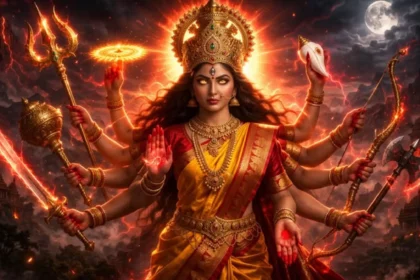
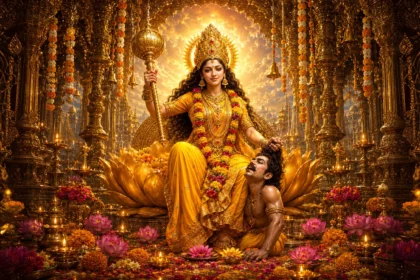
Mangala Gauri Vrat is a sacred fast dedicated to Goddess Mangala Gauri – an auspicious form of Goddess Parvati. The word “Mangala” itself means auspiciousness, and “Gauri” is the radiant form of Devi Parvati. She once performed intense penance to receive Lord Shiva as her husband.
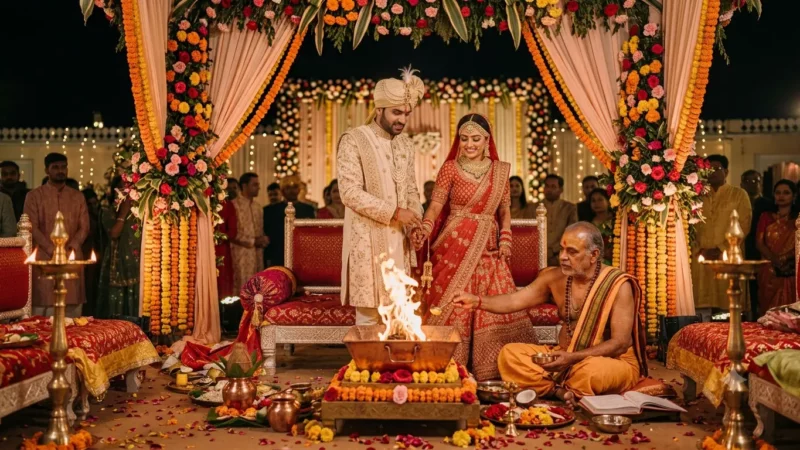
By worshipping the devi on all Tuesdays of Shravan, women seek that same blessing of an unbroken, pleasant married life. The vrat is traditionally observed by newly married women during the first five years of their marriage.
However, today, women continue observing the fast even afterwards as a mark of devotion and family tradition. Unmarried girls also keep this vrat, praying for a suitable and caring life partner.
While the core belief remains the same everywhere, the vrat is known by slightly different names across regions. In parts of Andhra Pradesh, Telangana, and Karnataka, it is called Mangala Gowri Vratam.
Also Read: How To Please Lord Shiva In Sawan 2026?
The Mangla Gauri Vrat Katha
The story behind this fast – the Mangla Gauri Vrat Katha is passed down through generations. An elder or priest usually recites it during the puja.
A wealthy merchant once had everything except the joy of a child. After years of prayers and pilgrimages, he was blessed with a son. An astrologer warned that the boy would face danger from a snake in his sixteenth year.
The parents tried everything to protect their son from this fate. He grew up and married a girl from a devoted family. Her mother had faithfully observed the Mangla Gauri Vrat for years. Through this devotion, the goddess blessed her daughter with a boon. She would never face widowhood in her life.
True to the prophecy, a snake bit the boy in his sixteenth year. But his wife’s inherited blessing saved him from death. He was revived and lived a long, contented life of a hundred years.
This story explains why the vrat is believed to protect a husband’s life. It also explains why mothers wish their daughters to observe it.
Also Read: Facing Delays? Here’s How Lord Shani Helps You
Mangla Gauri Vrat Vidhi: Step-by-Step Ritual
The puja is simple in spirit but rich in ritual detail. Here is the step-by-step vidhi generally followed:
- Wake up early and bathe: Devotees rise before sunrise, bathe, and wear fresh clothes, typically in auspicious yellow or red.
- Set up the puja space: A clean chowki (wooden platform) is placed and covered with a red or yellow cloth. A Kalash filled with water and topped with mango leaves is placed on it.
- Install the idol or picture: An image or idol of Goddess Mangala Gauri (Devi Parvati) is placed at the centre of the setup.
- Offer the Solah Shringar and 16 of everything: A key feature of this vrat is offering items in sets of sixteen: 16 flowers, 16 varieties of fruits or sweets, 16 diyas, along with haldi (turmeric), kumkum (vermilion), bangles, a mirror, and a comb – all symbolic of a woman’s suhaag (marital adornments).
- Perform Ganesh Puja and Navagraha Puja: Before worshipping the main deity, Lord Ganesha and the nine planets are worshipped to remove obstacles.
- Recite the Mangla Gauri Vrat Katha: The story is read or listened to attentively, usually followed by aarti.
- Chant the Mangala Gauri Mantra: “Om Gaurishankaraya Namah” is commonly chanted while offering vermilion to the goddess Mangla Gauri.
- Observe the fast: Many women observe a nirjala (waterless) or phalahar (fruit-only) fast through the day, breaking it with a single sattvik meal in the evening.
- Udyapan: After completing the vrat for the prescribed number of years (traditionally five), a concluding udyapan ceremony is performed, and prasad, turmeric, and vermilion are distributed among married women.
What is the benefit of Mangla Gauri Vrat?
The benefit of Mangala Gauri Vrat lies in its deep connection to marital well-being, protection, and devotion. It is believed that observing this vrat with sincerity brings the following blessings:
- Long life and well-being of the husband: The vrat is chiefly kept to protect a husband from untimely misfortune and to bless him with a long, healthy life.
- Harmony and love in married life: Goddess Mangala Gauri, as an embodiment of Devi Parvati’s devotion to Shiva, is believed to strengthen the bond and understanding between spouses.
- Protection from widowhood and marital separation: As reflected in the vrat katha, the fast is associated with the boon of “Akhand Saubhagya” – an unbroken, uninterrupted married life.
- Blessings for unmarried women: Young, unmarried girls observe the Mangla Gauri Vrat seeking a suitable and devoted life partner.
- Family happiness and prosperity: Beyond the couple, the Mangala Gauri Vrat is believed to bring peace, positivity, and prosperity to the entire household.
- Correction of Marital doshas: The vrat is closely tied to pacifying an afflicted Mars (Mangal) in one’s horoscope (Mangal dosha), which is often responsible for delays or conflict in marriage.
Pair Mangla Gauri Vrat with Vivah Badha Nivaran Puja
Mangla Gauri, as the goddess who governs auspiciousness in married life, is closely associated with soothing afflictions like Mangal dosha. This is why many families choose to complement their vrat with a dedicated Vivah Badha Nivaran Puja, performed by qualified Vedic priests, at one of these two points:
-
Before beginning the Vrat
If there’s a Mangal Dosha in the kundli, a history of delayed marriage, or ongoing friction between spouses, performing the Vivah Badha Nivaran Puja before starting the Mangla Gauri Vrat is believed to clear the underlying astrological obstacle first, so the vrat’s blessings can take fuller effect.
-
While breaking the fast or at Udyapan
Some families prefer to perform the puja on the day the fast is broken, or during the concluding udyapan. It is treated as a means of sealing its intentions with a focused Vedic remedy. It is especially significant after the Mangala Gauri Vrat is prescribed for years (first 5 years of marriage).
Conclusion
Mangla Gauri Vrat is more than a ritual fast – it’s a heartfelt tradition through which women, for generations, have prayed for the well-being, longevity, and happiness of their marriages. Rooted in devotion to Goddess Parvati and observed with sincerity every Tuesday of Shravan, it continues to hold deep meaning in Indian households today.