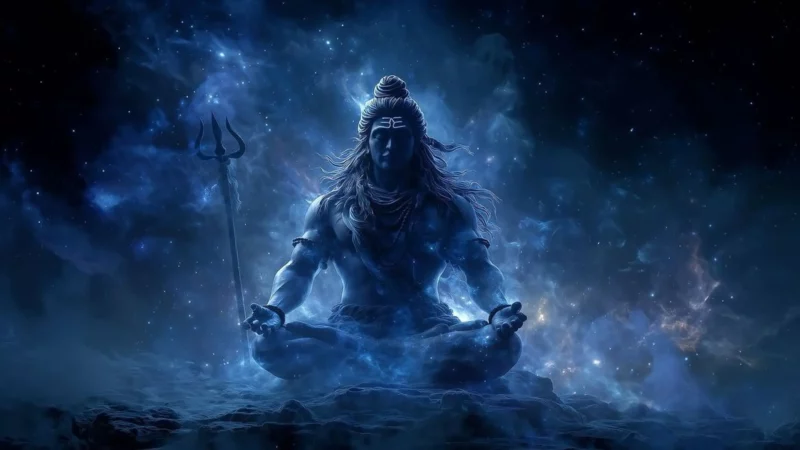
Lord Shiva is one of the most worshipped gods in Hinduism. He is part of the Trimurti, the three main gods of creation, care, and destruction. Everyone knows Shiva’s two sons, Ganesha and Kartikeya. Far fewer people know that a few goddesses are also called daughters of Lord Shiva.
Also Read: The Powers Of Maa Baglamukhi Puja
Daughters of Lord Shiva and Goddess Parvati
Suggested Puja

Sheeghra Santan Prapti Mahapuja
Seeking Santaan Prapti & blessing of children
Besides sons Ganesha and Kartikeya, a few goddesses are also known as daughters of lord Shiva and Parvati. These stories come from different texts and traditions, so the details change depending on which one you read. Here are the three most commonly named daughters of lord Shiva.
-
Ashok Sundari (Bala Tripura Sundari)
Ashok Sundari is also known as Lavanya, Anvi, Viraja, and Bala Tripura Sundari. Her name explains her story: “Ashok” means free of sorrow, and “Sundari” means beautiful.
The story is told in the Padma Purana, one of Hinduism’s major sacred texts. Parvati felt lonely after her son Kartikeya grew up and left Kailash. She asked Shiva to take her to the most beautiful garden there is. He took her to Nandanvana, where she found the Kalpavriksha, a tree said to grant any wish.
Parvati wished for a daughter to ease her loneliness, and Ashok Sundari was born from that wish. She later marries a king named Nahusha, and this part of the tale is also part of the Padma Purana. In South India, she is worshipped as Bala Tripura Sundari, and in Gujarat, she has her own following.
Also Read: Why Kaal Sarp Dosha Puja Is Important For You?
-
Jyoti
Jyoti means light, and she is called the goddess of light and of the Vel, the sacred spear carried by her brother Murugan (Kartikeya). Unlike Ashok Sundari, Jyoti doesn’t have one clear birth story; there are two different versions. One says she came from Shiva’s own glow. The other says she was born from a spark on Parvati’s forehead, and that Parvati used this spark to create the Shakti Vel, the weapon Murugan later used to defeat the demon Surapadman.
Jyoti’s worship is mostly found in Tamil Nadu, where she is honoured as Jwalamukhi and Rayaki, and she is believed to exist without a fixed form inside temples built for her brother Murugan. Her story comes mainly from Tamil devotional writing, especially a poem called Shodasam by the sage Agastya.
-
Manasa
The popular, widely told version says that when Shiva touched the serpent-mother Kadru, Manasa was born to her. She is shown seated on a lotus, wrapped in snakes, with seven cobra hoods forming a canopy above her head. She is deeply loved in Bengal, where devotees pray to her for protection from snakebite and diseases like smallpox and chickenpox, and for blessings during marriage or when hoping for a child.
However, the older Puranas tell a different story. They describe Manasa as the daughter of the sage Kashyapa, born from his mind, which is where her name comes from, since “manas” means mind.
In this original version, she is the sister of Vasuki, king of the serpents, and later becomes the wife of the sage Jaratkaru, with whom she has a son, the sage Astika. It was only later, in Bengali folk poetry called the Mangal Kavyas, that Manasa began to be described as Shiva’s daughter, rejected by both her father and her stepmother Parvati.
Connection to the Santan Prapti Puja
There is a direct connection. The daughters of Lord Shiva and Goddess Parvati have a special place in prayers for having a child (Santan Prapti).
1. Ashok Sundari (The Remover of Sorrow)
Her Story: Goddess Parvati was lonely and wanted a child. She wished for a daughter under a magical tree, and Ashok Sundari was born.
The Connection: “Ashok” means “no more sadness.” Couples who cannot have a baby pray to her during the puja. They ask her to remove their sadness and bless them with a child, just like she brought joy to Mother Parvati.
2. Mansa Devi (The Protector)
The Connection: She is known as a protector of children. Parents and couples pray to her during the puja to protect the pregnancy, keep the unborn baby safe, and bless the child with a long, healthy life.
3. Goddess Jyoti (The Divine Light)
The Connection: “Jyoti” means light. She is worshipped during the puja to bring a bright, intelligent, and healthy soul into the mother’s womb.
During the Santan Prapti Puja, worshipping Shiva and Parvati’s daughters helps couples overcome infertility, brings happiness to the home, and protects the health of the future baby.
5 Daughters of Lord Shiva, According to a Popular Shiva Purana Legend
Apart from the three names above, there is a separate story often linked to the Shiva Purana that talks about 5 daughters of lord Shiva. It says that once, while Shiva and Parvati were spending time near a lake, Shiva’s seed fell onto a leaf he had placed by the water. From this came five daughters, but not in human form. They were born as young snake maidens, known as Nagakanyas. Their names are:
- Jaya
- Vishahar
- Shamlibari
- Dev
- Dotali
Shiva knew about these daughters and loved them dearly. He visited them by the lake every morning. Parvati did not know about this and grew curious about where he disappeared to each day. When she followed him and saw him with the Nagakanyas, she became angry, until Shiva explained that they too were her daughters, born from him.
Conclusion
The lord Shiva daughters are not as famous as his sons, but each one carries a story shaped over centuries by different regions, texts, and communities. Some, like Ashok Sundari, have a firm place in scripture. Others, like Jyoti, are more symbolic than literal. And some, like Manasa, show how popular devotion can grow into a story quite different from where it first began.