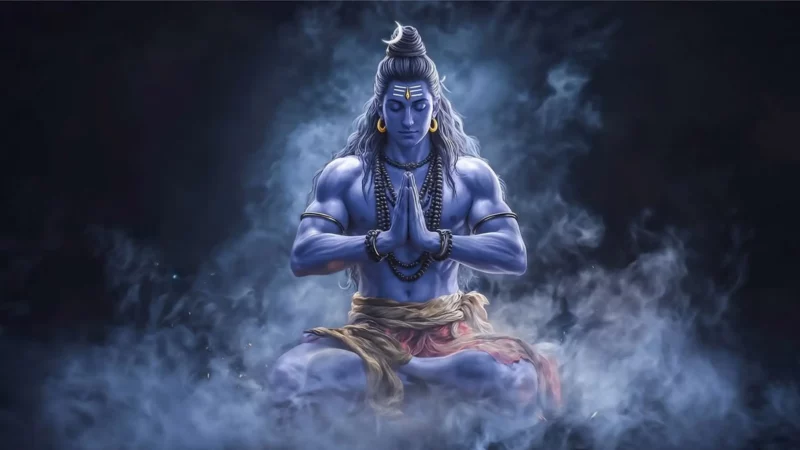
Lord Shiva is called Bholenath, the simple-hearted Lord pleased more by devotion than by grand offerings. Ancient texts repeat one message again and again: a leaf, a few drops of water, and a sincere heart are enough to reach Mahadev.
Also Read: The Powers of Maa Baglamukhi Puja
How Is Lord Shiva Worshipped, and Why Is He Easily Pleased?
Lord Shiva is worshipped in many ways. The most common form is the Shivling, which the Linga Purana and Shiva Purana explain as a symbol of the formless, infinite Shiva.
What makes Lord Shiva special is that he is easy to please. He is called Ashutosh, “the one who is pleased quickly,” and Bholenath, the simple-hearted Lord. The Puranas give a few reasons:
- He values devotion, not the offering. The Shiva Purana teaches that Shiva looks at the heart. A few drops of water, one bilva leaf or a sincere “Om Namah Shivaya” is enough.
- He accepts every devotee. The Shiva Purana and Linga Purana tell how the young sage Markandeya held on to the Shivling when Yama came for him, and Shiva saved him. This is why Shiva is called Mrityunjaya, the conqueror of death.
- He takes on the pain of others. He drank the deadly Halahala poison to save the world and became Neelkantha.
- He loves truth and humility. In the Shiva Purana, Shiva honoured Vishnu for honestly admitting he could not find the end of the fiery pillar, and cursed Brahma for lying.
Also Read: Why Perform Kaal Sarp Dosha Puja This Sawan?
How to Please Lord Shiva?
Suggested Puja
Rahu-Ketu Dosh Shanti Puja & Shiv Rudrabishek
Bring Mental Peace, Inner Strength & Positive Energy.
If your goal is to understand how to please Lord Shiva, the Shiva Purana teaches that devotion is more important than expensive offerings.
-
Offer Pure Water (Jalabhishek)
The simplest worship of Shiva is to offer clean water on the Shivling in the morning. The Puranas teach that Shiva values the bhava (feeling) behind the offering more than its cost. This is the idea behind the famous Puranic teaching that even a simple offering made with faith is complete worship.
-
Offer Bilva (Bel) Leaves
The Shaiva Puranas praise the Bilva leaf as very dear to Shiva. Offer a set of three joined leaves while chanting “Om Namah Shivaya.” The leaf should be clean and whole. The popular hymn Bilvashtakam is also devoted to this offering.
-
Chant the Panchakshari Mantra
“Om Namah Shivaya” is the five-syllable mantra of Shiva. The words “Namah Shivaya” are found in the Shri Rudram of the Yajurveda. The Shiva Purana (Vidyeshwara Samhita) gives it great importance and says that devotees can chant it with or without a formal initiation. Many devotees chant it 108 times a day using a Rudraksha mala.
4. Apply Bhasma and Wear Rudraksha
The Vidyeshwara Samhita of the Shiva Purana has separate chapters on the greatness of Shiva’s name, holy ash (bhasma) and Rudraksha. In the Shastri translation, these are chapters 23, 24 and 25. The text calls these three the marks of a Shiva devotee, and says that worship is incomplete without bhasma and Rudraksha.
- Bhasma is applied as a tripundra (three horizontal lines) on the forehead. It reminds the devotee that everything in life is temporary.
- Rudraksha beads are worn or used for japa. The word means “the eyes of Rudra.”
5. Observe the Monday Fast
Many devotees keep a fast on Mondays with discipline and faith. A popular practice is the Solah Somvar Vrat, a vow of sixteen Mondays. This vrat comes from devotional tradition and the vrat kathas rather than from one single Purana. Fruits, milk and light food are taken, and the fast is ended after the evening puja.
6. Observe Pradosh Vrat
According to the Skanda Purana, worship of Shiva at Pradosh Kaal brings special blessings. Bathe, visit a Shiva temple or worship at home in the evening twilight, offer water and bilva leaves, light a diya and chant Shiva mantras.
7. Visit a Shiva Temple or Perform Rudrabhishek
In Rudrabhishek, the Shivling is bathed with water, milk, curd, honey, ghee and sugar while the Shri Rudram is chanted. It is one of the oldest and most respected forms of Shiva worship. Many people perform it through a pandit for peace, health and removal of obstacles.
8. Practice Truth and Honesty
This is the heart of the matter. In the Shiva Purana story of the Jyotirlinga, Vishnu honestly accepted that he could not find the end of the pillar of fire, and Shiva honoured him. Brahma lied and was cursed. Shiva’s pleasure is closely tied to truthfulness, humility and good conduct. Respecting parents, helping the poor, feeding animals and controlling anger are all considered worship.
9. Worship in Your Mind (Manasa Puja)
If you cannot get any offerings, you can worship Shiva mentally. The Shiva Manasa Puja, a hymn composed by Adi Shankaracharya, offers every item of worship in the mind. It shows that devotion alone is enough.
What Should You Offer to Lord Shiva?
According to the Shiva Purana and Linga Purana, every offering made to Lord Shiva carries a symbolic meaning. These offerings represent purity, gratitude, surrender, and devotion rather than material value.
Choosing the right offerings can make your worship more meaningful and spiritually fulfilling.
- Pure water and gangajal: The base of every abhishek, symbolising purity and surrender
- Panchamrit: A traditional five-part offering believed to please Shiva deeply. It is made of milk, curd, ghee, honey and sugar)
- Bel Patra: Also known as Bilva leaves, it is considered Lord Shiva’s most loved offering, ideally in sets of three joined leaves.
- White flowers: White is Lord Shiva’s preferred colour, unlike red flowers offered to other deities.
- Dhatura and Bhang: Both dhatura and bhaang are considered dear to Lord Shiva in his ascetic form.
- Sandalwood paste: Devotees apply sandalwood paste (chandan) as a cooling tilak on the Shivling.
- Akshat: It is unbroken raw rice. It is offered as a symbol of prosperity and completeness, only if the grains are whole.
What Not to Offer To Lord Shiva
Just as some offerings are especially loved by Lord Shiva, a few things are considered unsuitable and are best avoided, both in worship and in daily life through the month.
-
Do not offer kumkum or vermilion
Tradition links kumkum to feminine beauty and marital fortune, not to Shiva’s ascetic nature.
-
Do not offer Tulsi leaves
Unlike most other deities, Lord Shiva traditionally does not accept Tulsi. A specific Puranic story about Tulsi and the demon Shankhachud explains why.
-
Do not offer Ketaki flowers
According to the Shiva Purana, the Ketaki flower gave false witness for Brahma during his dispute with Vishnu. Shiva cursed the flower for it, and devotees still avoid it today.
-
Avoid non-vegetarian food
Do not consume non-vegetarian meals, alcohol, onion, and garlic throughout the month, especially if you are keeping the Somwar Vrat.
-
Avoid harsh speech, anger, and dishonesty
The scriptures treat good conduct itself as a form of worship during this month.
Vivah Badha Puja: Your Answer to Marriage-Related Struggles
The Rudra Samhita of the Shiva Purana, especially the Parvati Khanda, tells how Goddess Parvati performed long and difficult penance to win Shiva as her husband. Kalidasa’s famous Sanskrit poem Kumarasambhava tells the same story.
For this reason, many people perform Vivah Badha Puja and pray to Shiva and Parvati together for a happy marriage and for the removal of delays. It typically includes:
- 11,000 Rudra Mantra Jaap, a large-scale chanting commitment believed to intensify the puja’s effect
- Panchamrit Rudrabhishek, the same five-part offering of milk, curd, ghee, honey, and sugar used in daily worship, but performed with heightened ritual focus
- 108 Bilva Patra Archan, offering 108 Bel leaves individually while chanting Shiva’s name
- Shiv Tandav Stotra Path, the recitation of one of the most powerful devotional hymns dedicated to Lord Shiva, traditionally associated with removing deep-rooted obstacles
Powerful Shiva Mantras To Chant to Please Lord Shiva
Mantras are one of the simplest ways to connect with Lord Shiva. You do not need any special items, only a calm mind and a sincere heart. These are the most loved Shiva mantras, with their source and meaning.
-
Panchakshari Mantra
Considered the most basic and most powerful mantra dedicated to Lord Shiva. Devotees believe that chanting it 108 times daily, ideally with a Rudraksha mala, brings peace, protection and steady spiritual growth.
ॐ नमः शिवाय
Om Namah Shivaya
Meaning: “I bow to Lord Shiva.” This is the simplest possible form of surrender, offering respect to Shiva without asking for anything in return.
-
Mahamrityunjaya Mantra
This mantra is chanted for health, protection from untimely difficulties, and overall well-being.
ॐ त्र्यम्बकं यजमहे सुगन्धिं पुष्टिवर्धनम्
उर्वरुकमिव बन्धनन मृत्युर मुखिया मामृतत
Om Tryambakam Yajamahe Sugandhim Pushtivardhanam
Urvarukamiva Bandhanan Mrityor Mukshiya Maamritat
Meaning: “We worship the three-eyed Lord Shiva, who is fragrant and who nourishes and strengthens all beings. May he free us from the bondage of death, just as a ripe cucumber is easily separated from its vine, and lead us toward immortality.”
-
Rudra Gayatri Mantra
This mantra is used to invoke Lord Shiva’s Rudra form, and is often chanted before beginning a Rudrabhishek.
ॐ तत्पुरुषाय विद्महे महादेवाय धीमहि
तन्नो रुद्रः प्रचोदयात्
Om Tatpurushaya Vidmahe Mahadevaya Dheemahi
Tanno Rudrah Prachodayat
Meaning: “We seek to know the Supreme Being. We meditate on the great god Mahadeva. May Lord Rudra guide and awaken our understanding.”
-
Shiv Tandav Stotra
A longer devotional hymn traditionally recited by advanced devotees, describing Lord Shiva’s cosmic dance.
Benefits Lord Shiva Will Bless You With
Devotees call Lord Shiva Ashutosh, the one who is quickly pleased. According to the Shiva Purana and other ancient texts, a devotee who worships him with faith and a pure heart receives these blessings.
1. Peace of Mind and Inner Strength
Shiva is the Lord of meditation and stillness. Devotees believe that chanting “Om Namah Shivaya” and sitting quietly before the Shivling calms a restless mind and gives the strength to stay steady in hard times.
2. Freedom from Fear
Shiva drank the deadly Halahala poison to save the world and became Neelkantha. Because of this, he is seen as the protector who removes fear. Devotees pray to him for freedom from worry, negative thoughts, and the fear of the unknown.
3. Courage in Difficult Times
The Puranas show Shiva as the one who stands by his devotees in their darkest moments. Many believe that his blessings give the courage to face problems with patience instead of running from them.
4. Good Health and Long Life
The Mahamrityunjaya Mantra, which comes from the Rig Veda, is chanted for health, protection and long life. Many families recite it for a sick loved one or for general well-being.
5. Harmony in Family and Relationships
Shiva is the head of a divine family with Goddess Parvati, Ganesha and Kartikeya. He is worshipped as the ideal husband and father. Devotees pray to Shiva and Parvati together for love, understanding and a peaceful home.
The Rudra Samhita of the Shiva Purana tells how Parvati’s deep devotion won Shiva as her husband, which is why couples and unmarried people alike pray to them for a happy marriage.
6. Removal of Obstacles and Delays
Devotees know Shiva as the destroyer of hurdles in their path. Many people turn to him when work, marriage or important plans get stuck. Devotees believe that regular worship, such as Monday fasts, Pradosh Vrat and Rudrabhishek, opens the way.
Note: These benefits are based on Hindu beliefs and scriptures. They are matters of faith and personal experience, not guaranteed outcomes. Worship works best when done with sincerity and patience.
Summary
Pleasing Lord Shiva is not about expensive rituals. The Shiva Purana teaches that water, bilva leaves, the name of Shiva, honest conduct and a pure heart are enough. Whether you fast on Mondays, observe Pradosh, chant Om Namah Shivaya or simply think of Mahadev with love, he accepts every prayer made with faith.