Beside the Ganga in Kashi lies Manikarnika Ghat Varanasi, a place tied to Lord Shiva, Vishnu and the memory of ancestors. Discover the Manikarnika Ghat story, why families choose shradh in Manikarnika Ghat, and what makes Banaras Manikarnika Ghat special for pind daan.
Why Is Manikarnika Ghat Important in Hindu Tradition?
Suggested Puja
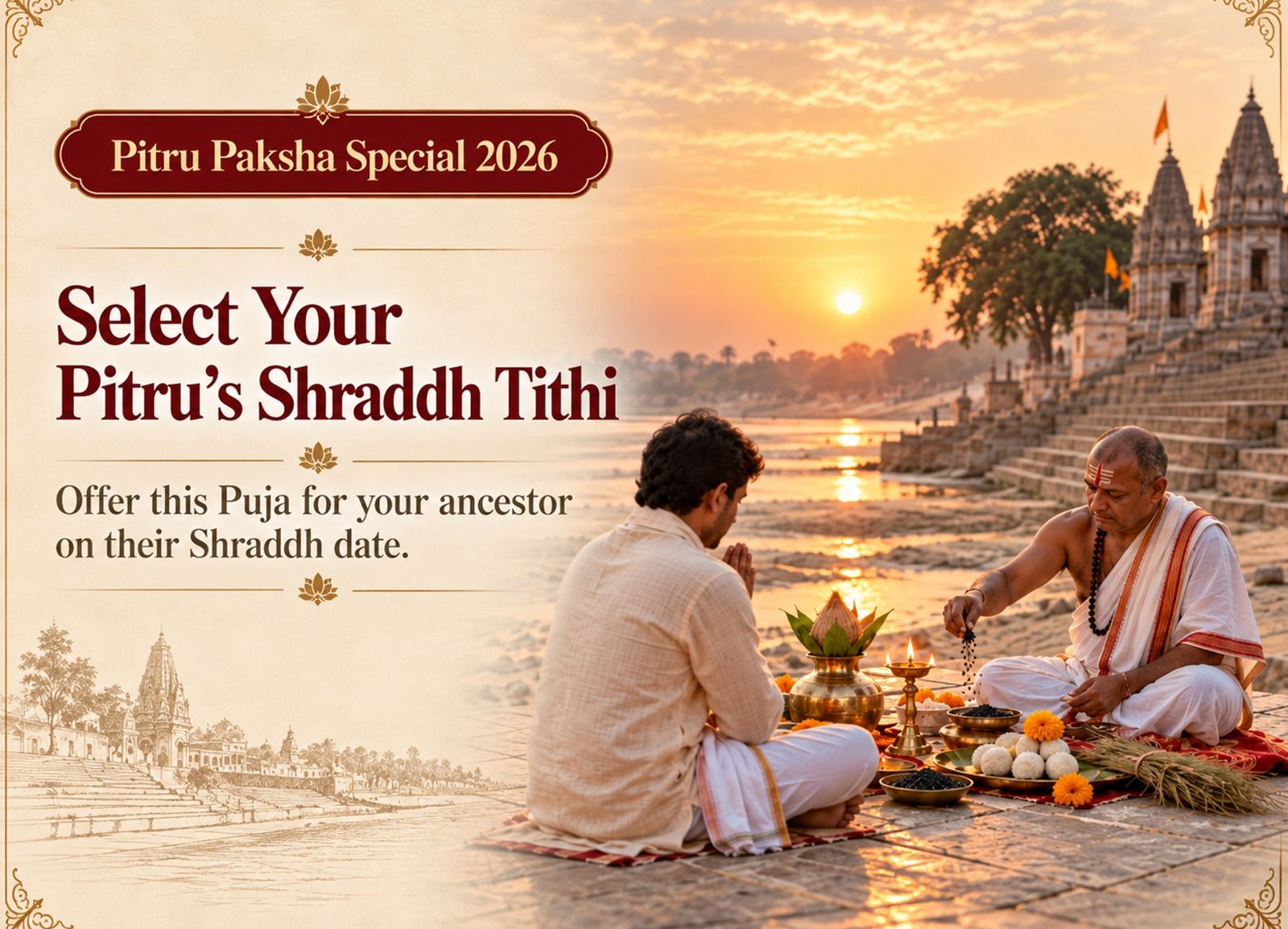
Manikarnika Ghat Tripindi Shraddh, Til Tarpan and Pind Daan Puja
Pray For Peace & Seek Pitru Blessings
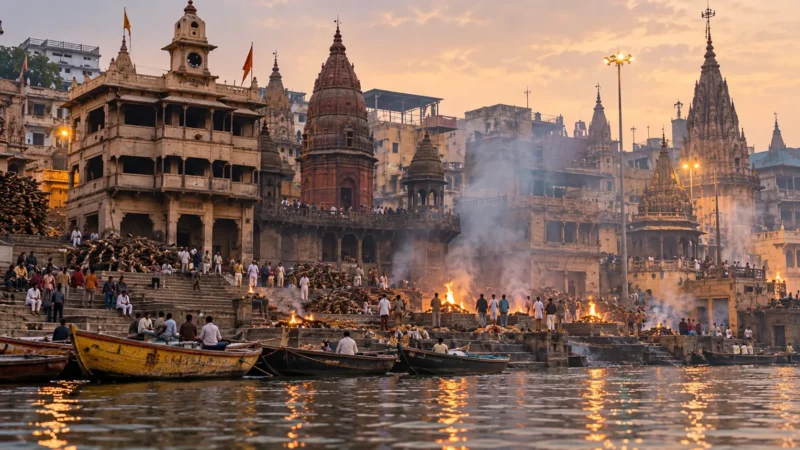
Banaras Manikarnika Ghat is one of the most sacred sites in Varanasi and is traditionally associated with Lord Shiva, Goddess Parvati and the Ganga. It is also one of the main cremation ghats of Kashi.
The Kashi Khanda of the Skanda Purana describes Manikarnika as an important tirtha and connects the site with rituals such as Tarpana and Pind Daan.
Also Read: Why Gaya is Considered Sacred for Pind Daan?
The Legend Behind Manikarnika Ghat
The Manikarnika Ghat story comes mainly from the Kashi Khanda, a large section of the Skanda Purana that describes the greatness of Kashi. Let us look at the different versions of the Manikarnika Ghat story.
- Story of Lord Vishnu’s penance: The Kashi Khanda says Lord Vishnu dug a well with his discus, the Sudarshana Chakra, and filled it with the sweat of his own austerities, which he performed beside it for 50,000 years. Lord Shiva was moved by this devotion and granted Vishnu a boon.
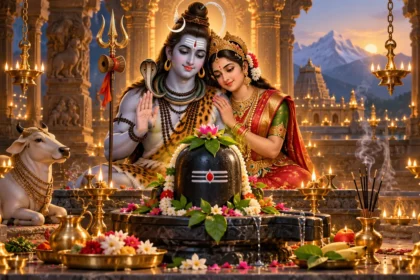
- Story of the earring: The name Manikarnika means “jewel of the ear.” One legend says that Parvati’s earring fell into the well while she and Shiva sat beside it, so Shiva named the well Manikarnika after the ornament. Another version says it was Shiva’s earring that fell in. Some traditions link the place to Sati’s earring and count it as a Shakti Peeth.
- Story of the final whisper: Kashi tradition says that when a person dies in Kashi, Lord Shiva whispers the Taraka Mantra, the “mantra of crossing,” into the ear of the departing soul. The Bhasmajabala Upanishad also says that those who die in Varanasi receive this mantra from Shiva moments before death and attain salvation.
Also Read: Kalabhirava Ashtakam: Lyrics, Meaning And Benefits
The Vishnu Kund and Manikarnika Ghat Tradition
The tank Vishnu is said to have dug is called Manikarnika Kund, or Chakra Pushkarini, which means “the lotus pool of the discus.” It is also known as Adi Manikarnika Tirtha. Tradition holds it to be the oldest tirtha of Kashi, older than the Ganga’s descent to earth. The kund is separate from the riverside ghat, though both share the Manikarnika name.
The Kashi Khanda records that Shiva said a devotee who bathes in this kund and then worships Kashi Vishwanath pleases him greatly. Because of this, many pilgrims see a bath here as a first step before other rituals.
What Is the Significance of Pind Daan at Manikarnika Ghat?
Pind Daan is an ancestral ritual performed in remembrance of departed family members. The word Pind refers to the offering made during the ritual, traditionally prepared from ingredients such as rice, while Daan means an offering or act of giving.
Families perform these rituals to remember their ancestors, express gratitude and fulfil their traditional duties towards departed family members. Manikarnika has a special connection with these practices because the Kashi Khanda of the Skanda Purana specifically mentions Tarpana and offerings of rice balls at Manikarnika.
The text describes these religious acts as part of the sacred practices performed at the tirtha. This is why many families choose shradh in Manikarnika Ghat when they want to remember their ancestors in Kashi.
Pind Daan Vidhi at Manikarnika Ghat
The exact Pind Daan Vidhi at Manikarnika Ghat Varanasi can vary depending on the type of Shradh being performed and the family’s tradition. A general Pind Daan ceremony may include the following steps:
-
Sankalp
The person performing the ritual takes a Sankalp, or a clear statement of intention. The priest may ask for details such as the name of the person performing the ritual, the family lineage or gotra and the name and relationship of the departed ancestor.
-
Invocation of the Ancestors
The ancestors are remembered and invoked through prayers and mantras. This establishes the purpose of the ritual and formally dedicates the offerings to them.
-
Preparation of Pindas
Pindas are prepared using traditional ingredients. Rice and sesame are commonly associated with ancestral rites, although the exact ingredients can vary according to the ritual and local practice.
-
Tarpana
Water is offered as part of Tarpana. Traditional texts describe the use of water, sesame and Kusha or Darbha grass in ancestral rites.
-
Pind Daan
The prepared Pindas are offered according to the instructions of the priest. The offering is accompanied by prayers and remembrance of the ancestors.
-
Daan and Concluding Prayers
Depending on the ritual, charity, offerings, or Dakshina may be given. The ceremony then concludes with prayers.
The complete procedure should be followed according to the specific ritual being performed. There is no single procedure that applies identically to every family, ancestor or occasion.
Who Can Perform Pind Daan at Manikarnika Ghat?
Traditionally, the responsibility for performing ancestral rites is often given to the Karta, or the family member who undertakes the ritual on behalf of the family.
In many Hindu families, a son or another close male relative traditionally performs Pind Daan. However, practices differ across regions, communities and family traditions. In some families, daughters or other close relatives may also perform ancestral rites.
If you are unsure about who should perform the ritual, it is better to consult a knowledgeable priest before beginning the ceremony. The priest can guide the family based on the relationship with the deceased, family tradition, gotra and type of Shradh being performed.
What Happens During Pind Daan in Manikarnika Ghat?
Before the Ritual
Before beginning the ceremony, the priest gathers the necessary details from the family to prepare the Sankalp, the formal statement of the ritual’s intention. The family should generally keep the following information ready:
- Name of the person performing the ritual, known as the Karta
- Name of the deceased ancestor
- Relationship between the Karta and the deceased
- Gotra, if known
- Date or tithi of death, if known
- Names and details of other ancestors if Pind Daan is being performed for more than one person
The priest then explains the procedure and arranges or checks the Puja Samagri required for the ceremony. This may include items such as rice or other ingredients used for the Pindas, sesame seeds, Kusha grass and water.
During the Ritual
The main ceremony is performed under the guidance of the priest. The Karta participates in the ritual while the priest recites the required mantras and gives instructions for each offering. Depending on the type of Shradh or Pind Daan being performed, the ceremony may include:
- Sankalp
- Invocation of the ancestors
- Tarpana
- Preparation of Pindas
- Pind Daan
- Prayers for the ancestors
- Daan or Dakshina
After the Ritual
Once the main offerings are completed, the priest performs the concluding prayers and completes the prescribed parts of the ceremony. Depending on the type of Shradh being performed, the concluding part may include:
- Final prayers for the departed ancestor
- Completion of the remaining offerings
- Dakshina to the priest
- Daan or charitable offerings, where part of the family’s chosen ritual
- Feeding Brahmins or other prescribed forms of food offering, where included in the Shradh tradition
The family should also ask the priest what to do with the remaining ritual materials or Pindas. These instructions can vary depending on the specific ceremony and local practice.
Best Time for Pind Daan in Manikarnika Ghat Varanasi
- Pitru Paksha: Pitru Paksha is one of the most important periods for ancestral rituals in the Hindu calendar. During this period, families traditionally perform Shradh, Tarpana and related rites for their ancestors.
- Amavasya (New Moon Day): Many families choose this day every month, especially Sarva Pitru Amavasya.
- Death Anniversary or Tithi: The tithi on which the ancestor passed away is a fitting day for the ritual. The date is determined according to the Hindu lunar calendar and family tradition.
- Purnima and Sankranti: Some families also choose these days for their spiritual value.
- Other Auspicious Occasions: Kashi tradition holds that the ritual is valid throughout the year. Choosing a quieter day can help you avoid crowds.
Other Sacred Ghats to Perform Pind Daan in Varanasi
Manikarnika is not the only place in Varanasi for ancestral rites. The traditional Kashi Panchteerthi route covers five ghats: Asi, Dashashwamedh, Adi Keshav, Panchganga and Manikarnika. Let us look at the other sacred places where you can perform Pind Daan in Varanasi.
1. Assi Ghat
Assi Ghat sits at the southern end of Varanasi, where the Assi stream meets the holy river Ganga. The Asisangameshwar Temple at the ghat is mentioned in the Kashi Khanda of the Skanda Purana. It is a calmer spot and a popular start to the Panchteerthi route.
2. Dashashwamedh Ghat
This is the best-known and most visited ghat in Varanasi, famous for its evening Ganga Aarti. Many pilgrims perform shradh and tarpan here because it is easy to reach and has many priests.
3. Harishchandra Ghat
Harishchandra Ghat is the second main cremation ghat in Kashi, after Manikarnika. Some families offer tarpan and prayers here for ancestors who were cremated at this ghat.
4. Panchganga Ghat
The Kashi Khanda links Panchganga with the sage Agnibindu, who prayed to Lord Vishnu here. Tradition says five rivers meet at this ghat. It is another stop on the Panchteerthi route.
5. Pishachmochan Kund
Pishachmochan, also called Vimal Teerth, is a sacred pond where many families perform shradh, especially for ancestors who died an unnatural death. It is said to bring peace to restless souls.
6. Adi Keshava Ghat
This ghat lies at the northern end of the ghats, where the Varuna River meets the Ganga. The Vishnu temple here is linked with Adi Keshava, one of the oldest Vishnu shrines in Kashi. It is the last stop on the Panchteerthi route.
Conclusion
Manikarnika Ghat Varanasi brings together legend, devotion and remembrance. Pind daan here is a simple, heartfelt way to honour ancestors. Follow your family’s tradition, seek a knowledgeable priest’s guidance, and perform the ritual with sincerity.