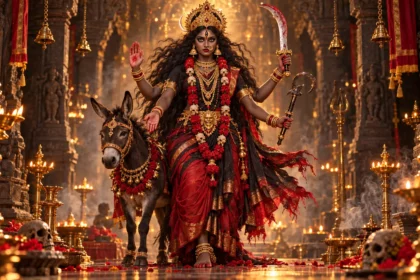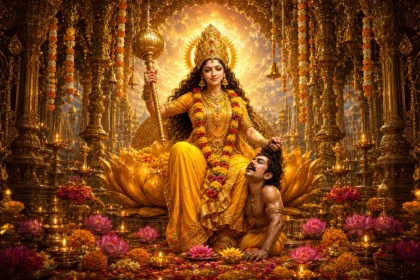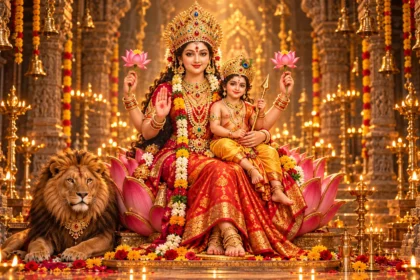
Every Navratri ends the same way: with a lamp lit for the goddess who completes what the other eight forms began. Maa Siddhidatri is the giver of fulfilment, and devotees bow to her on the ninth day with gratitude for the journey and hope for what comes next. This is the completion you invite with Siddhidatri Puja.
Also Read: The Powers Of Maa Baglamukhi
What Makes Siddhidatri Puja Special?
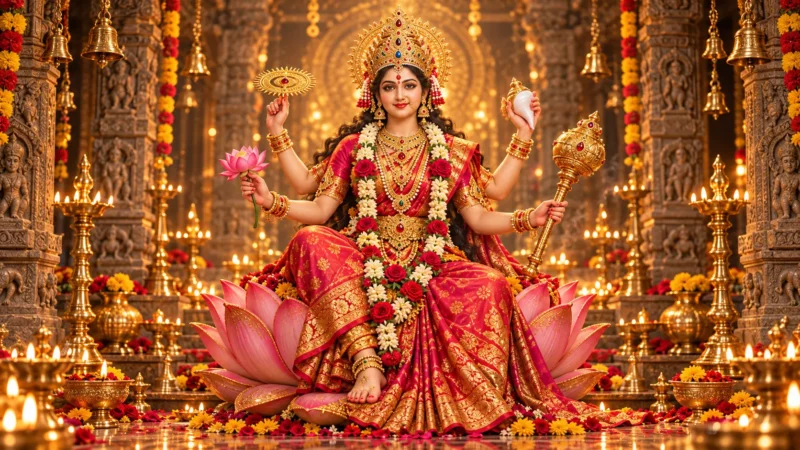
Siddhidatri Puja is the worship of Maa Siddhidatri, the ninth of the nine forms of Goddess Durga, on Day 9 of Navratri. The name joins Siddhi, meaning perfection or spiritual power, with Datri, meaning giver.
Tradition describes her as seated on a lotus, with a lion nearby. Her four arms hold a chakra, a mace, a conch and a lotus. According to the Puranas, even Lord Shiva worshipped her to gain all the siddhis, and by her grace half of his body became that of the goddess, which is how the Ardhanarishvara form arose.
She grants the eight siddhis: Anima, Mahima, Garima, Laghima, Prapti, Prakamya, Ishitva and Vashitva. She blesses the Nirvana chakra, the subtle centre of liberation linked with the crown.
Why Does Navratri Day 9 Belong to Maa Siddhidatri?
Devotees perform the puja on the ninth day of Navratri for these main reasons.
- She Follows Mahagauri: After the cleansing calm of Day 8, Day 9 brings the fulfilment that follows a purified heart.
- The Day of Completion: The ninth day closes the nine nights, and devotees thank the goddess for every form they have worshipped.
- Maha Navami Tithi: Day 9 falls on Navami, when many families perform havan and Kanya Pujan.
- Ketu and Liberation: Tradition associates her with Ketu, the planet of detachment and spiritual insight.
- The Eight Siddhis: Devotees believe she grants the powers and accomplishments that every seeker works towards.
- Shiva’s Own Worship: Even Lord Shiva worshipped her, which shows her place at the peak of the goddess’s nine forms.
How Do You Complete Navratri on Navami?
Navami is the day families bring their Navratri observance to a close. Many perform Siddhidatri Puja first, then a havan and Kanya Pujan, and break their fast the next morning.
What Is Navami Havan?
Havan is a sacred fire ritual in which devotees offer ghee and herbs while chanting the goddess’s mantras. Families commonly follow these steps:
- Prepare the Fire: Light the havan kund with dry mango wood and camphor.
- Offer the Samagri: Offer ghee, sesame, rice and havan herbs into the fire.
- Chant Her Mantra: Chant “Om Devi Siddhidatryai Namah” with “Swaha” for each offering.
- Offer the Purnahuti: Place a coconut in the fire as the final offering.
- Conclude with Aarti: Offer aarti and take the ashes as prasad.
How Do Families Perform Kanya Pujan on Navami?
Some families perform Kanya Pujan on Ashtami and others on Navami. Invite young girls, wash their feet, apply a tilak, serve halwa, puri and black chana, offer small gifts and touch their feet to take their blessings.
When Do Devotees Break the Navratri Fast?
Many devotees break their Navratri fast on Dashami after a morning puja, while others do so after completing Navami havan and Kanya Pujan. Follow your family custom or local panchang for the exact timing.
What Are the Benefits of Siddhidatri Puja?
Maa Siddhidatri is the gracious goddess who completes and fulfils, so devotees turn to her for success, wisdom and contentment. Tradition holds that her worship brings blessings in many areas, not just one.
Success and Fulfilment of Goals
Her name means giver of siddhi, and devotees pray to her for the successful completion of efforts they have worked on for a long time. Tradition associates her with accomplishment.
Students, professionals and entrepreneurs often seek her blessings. Devotees believe her grace rewards sincere effort and patience.
Wisdom, Skill and Knowledge
She grants the siddhis, so devotees pray to her for mastery of their craft and clarity of understanding. Tradition links her with learning and discernment.
Those preparing for exams, interviews or new roles often choose this puja. Devotees believe her blessings sharpen focus and confidence.
Spiritual Growth and Inner Awakening
Her link with the Nirvana chakra is why devotees pray to her for spiritual progress. They associate her with insight and the quiet pull towards liberation.
Regular practitioners and meditators often seek her blessings. Devotees believe her worship deepens devotion and steadiness in prayer.
Peace and Contentment
A completed effort brings a settled mind, and devotees pray to Maa Siddhidatri for exactly that. Tradition associates her gentle presence with contentment.
People who feel restless despite their achievements often choose this puja. Devotees believe a sankalp on Day 9 brings a sense of calm gratitude.
Relief from Confusion and Detachment Issues
Tradition links Maa Siddhidatri with Ketu, the planet of detachment and sudden turns. Devotees pray to her when they feel lost, directionless or cut off.
People going through a Ketu Mahadasha often seek her blessings. Devotees believe her worship helps them regain direction and purpose.
Blessings of All Nine Forms
Devotees believe that worshipping Maa Siddhidatri on the last day completes the blessings of the entire Navratri. They see her as the one who seals the nine nights with grace.
Families who observed the full fast often perform this puja together. Devotees believe the shared prayer brings harmony and gratitude into the home.
Who Should Perform Siddhidatri Puja?
As a devotee, you may want to perform Siddhidatri puja if you:
- Want to pray for the success of a long-awaited goal
- Are a student, professional or entrepreneur seeking mastery in your field
- Feel confused, directionless or detached from your path
- Have a weak or afflicted Ketu in your birth chart
- Are a regular practitioner seeking spiritual growth
- Observed the Navratri fast and wish to complete it with gratitude
- Plan to perform Navami havan or Kanya Pujan and want to begin with a puja
What Is the Astrological Link of Maa Siddhidatri Puja?
In Vedic astrology, each Navratri form is traditionally linked with a planet. Tradition associates Maa Siddhidatri with Ketu, the shadow planet of detachment, intuition and liberation.
- Ketu: Ketu governs spiritual insight, detachment and sudden change. Devotees with a weak or afflicted Ketu, often seen as confusion, aimlessness or unexpected obstacles, traditionally turn to Maa Siddhidatri.
- Ketu-ruled Nakshatras: Ashwini, Magha and Mula come under Ketu. There is no scripturally fixed nakshatra for Maa Siddhidatri, but devotees born under these stars often choose her puja to steady Ketu’s influence.
- Ketu Mahadasha: Devotees running a Ketu Mahadasha or Antardasha often pray to her for direction and clarity.
- Navami Tithi: The ninth tithi is traditionally seen as a powerful day for completion and gratitude.
- Nirvana Chakra: Linked with liberation and the crown, it relates to spiritual awareness and fulfilment.
Who Can Perform Siddhidatri Puja as a Remedy?
- Those with a weak or afflicted Ketu, or those running a Ketu Mahadasha or Antardasha
- People facing confusion, aimlessness or sudden obstacles
- Those with Ketu-related doshas, including Kaal Sarp Dosha
- Seekers who want to complete their Navratri with a sankalp of gratitude and spiritual growth
Siddhidatri Puja Samagri and Vidhi
You can perform the puja at home or follow along with a pandit. Either way, the right samagri and a calm, simple vidhi keep your prayer focused.
Samagri
Sesame seeds (her traditional bhog), halwa, puri, black chana, lotus or red flowers, kumkum, akshat (rice), incense, a diya, a japa mala, an image of Maa Siddhidatri, and a kalash filled with water. For Navami havan, keep mango wood, ghee, camphor, sesame and a coconut ready.
Simple Vidhi
Bathe early and wear clean clothes, preferably in pink. Set up an image of Maa Siddhidatri, light a lamp, offer flowers and sesame-based bhog, and chant her mantra with a mala. Pray with a clear sankalp, conclude with aarti, and then perform havan and Kanya Pujan if your family follows them.
The Powerful Chants for Maa Siddhidatri Puja
Devotees recite these popular chants to please Maa Siddhidatri.
1. Maa Siddhidatri Mantra
ॐ सिद्धिदात्र्यै नमः॥
Om Siddhidatryai Namah॥
2. Maa Siddhidatri Prarthana
Devotees recite this verse to ask Maa Siddhidatri, whom siddhas, gandharvas, yakshas, asuras and gods all worship, to always grant perfection.
सिद्धगन्धर्वयक्षाद्यैरसुरैरमरैरपि।
सेव्यमाना सदा भूयात् सिद्धिदा सिद्धिदायिनी॥
Siddhagandharvayakshadyairasurairamarairapi।
Sevyamana Sada Bhuyat Siddhida Siddhidayini॥
3. Mantra to Honour the Divine Feminine in Every Woman
Devotees chant it to see every woman with a mother’s reverence. It says that all knowledge and all women are forms of the goddess.
विद्याः समस्तास्तव देवि भेदाः स्त्रियः समस्ताः सकला जगत्सु।
त्वयैकया पूरितमम्बयैतत् का ते स्तुतिः स्तव्यपरा परोक्तिः॥
Vidyah Samastastava Devi Bhedah Striyah Samastah Sakala Jagatsu।
Tvayaikaya Puritamambayaitat Ka Te Stutih Stavyaparaparoktih॥
4. Mantra for Liberation and Higher Aspirations
Devotees chant it to seek spiritual elevation and liberation.
सर्वभूता यदा देवी स्वर्गमुक्तिप्रदायिनी।
त्वं स्तुता स्तुतये का वा भवन्तु परमोक्तयः॥
Sarvabhuta Yada Devi Svargamuktipradayini।
Tvam Stuta Stutaye Ka Va Bhavantu Paramoktayah॥
5. Mantra for Land and Home
Devotees chant it when praying for a home or land.
गृहीतोग्रमहाचक्रे दंष्ट्रोद्धृतवसुन्धरे।
वराहरूपिणि शिवे नारायणि नमोऽस्तु ते॥
Grihitogramahachakre Damshtroddhritavasundhare।
Varaharupini Shive Narayani Namostu Te॥
6. Mantra for Blessings of Children
Tradition recommends this mantra for those who pray for children, and many offer ghee and butter in havan alongside it. It is spiritual support and does not replace medical care.
नन्दगोपगृहे जाता यशोदागर्भसम्भवा।
ततस्तौ नाशयिष्यामि विन्ध्याचलनिवासिनी॥
Nandagopagrihe Jata Yashodagarbhasambhava।
Tatastau Nashayishyami Vindhyachalanivasini॥
Conclusion
Maa Siddhidatri shows that every sincere journey finds its fulfilment. The same goddess who grants the highest accomplishments blesses her devotees with wisdom, contentment and the grace to begin again. Close this Navratri with gratitude, and let her blessings carry you forward. Jai Maa Siddhidatri!